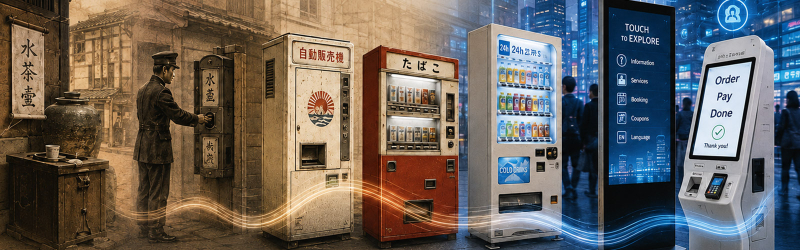
From Vending Machines to AI: The Software Behind Every Kiosk
From the 1880s vending machine to AI at the point of sale: how software really moved self-service forward.
Most businesses that invest in self-service kiosks today focus almost entirely on hardware: screen size, enclosure design, payment terminal compatibility, and unit cost. The software layer, which determines what the kiosk does, how it operates, and whether customers actually engage with it, is often evaluated last, if at all. That instinct gets the history of this industry exactly backward. The story of self-service is not a hardware story. Every meaningful leap in self-service technology, across centuries and industries, has been driven by a smarter system behind the screen rather than a better enclosure around it.
In short:This whitepaper traces the development of self-service kiosk technology from its earliest mechanical predecessors to the software-driven platforms defining the industry today. It is written for retail technology decision-makers, point-of-sale innovators, and researchers who want a grounded understanding of how this industry evolved and where it is heading.
In this whitepaper, you will learn:
The Origins of Self-Service Technology (Pre-1960s)
The instinct behind self-service predates electricity, computing, and the modern concept of retail. Before any screen existed, humans were already designing systems that gave people direct access to goods and services without the need for a human intermediary.
Ancient Origins
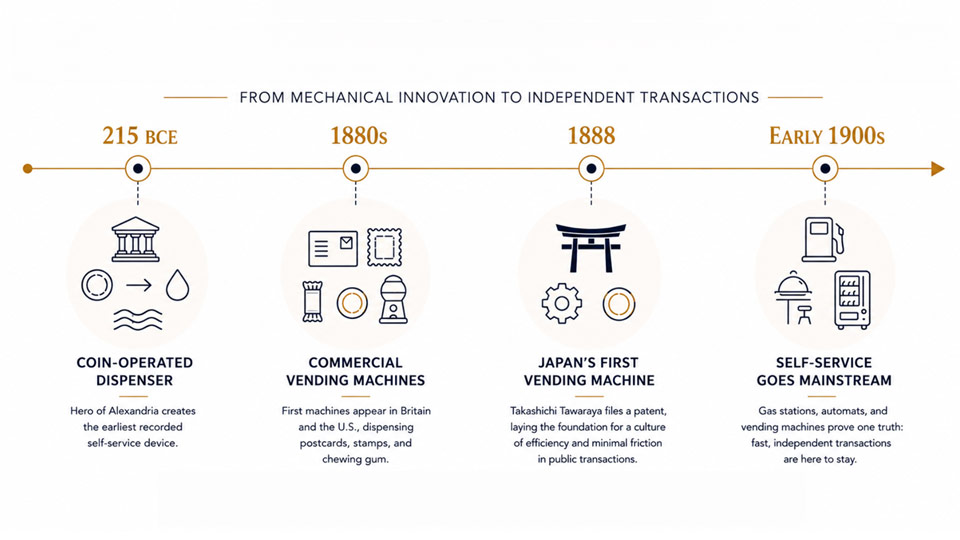
The earliest recorded self-service device dates to around 215 BCE, when the Greek engineer Hero of Alexandria built a coin-operated mechanism that dispensed holy water inside Egyptian temples. A visitor dropped a coin into a slot, its weight tipped a lever, and a measured amount of water flowed out[1].
The logic behind it was identical to what drives a self-checkout terminal today: Give people access to what they need, on their own terms, without requiring someone else to be present.
The Mechanical Era
The modern chapter of self-service began in the 1880s, when the first commercial coin-operated vending machines appeared in Britain and the United States, dispensing postcards, stamps, and chewing gum[2].
In 1888, a Japanese inventor named Takashichi Tawaraya filed a patent for Japan's first vending machine, marking the beginning of a self-service culture shaped by a deep cultural emphasis on efficiency and minimal friction in public transactions[3]. That foundation runs directly through to the restaurant ticket machines, known as shokken, that became standard in Japanese dining decades before Western fast food chains began experimenting with self-order kiosks.

In the West, self-service gas stations, automats, and vending machines kept growing through the early 1900s. The consistent truth was that when a transaction is made quickly and without a human intermediary, people end up adopting it[4]. Still, no one had really pinned down whether that same openness would reach electronic systems that must manage more complex interactions, not just simple payments. That uncertain point would end up framing the next chapter.
The Digital Turning Point (1960s–1980s)
The mechanical era proved that people would use unattended systems if those systems were reliable and fast. What it could not prove was whether people would trust a machine with something more consequential. That question was answered in the 1960s, when electronics entered the picture, and the self-service terminal reached an entirely new level of capability.
The ATM and the Birth of Electronic Self-Service
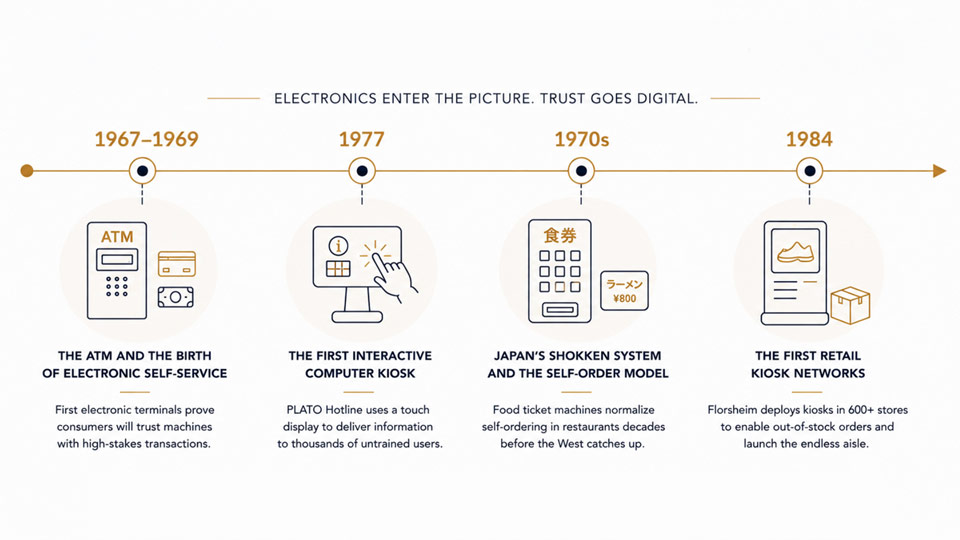
The first cash machine was installed at a Barclays Bank branch in London in 1967, followed by the first true automated teller machine in New York in 1969, developed by Donald Wetzel at Docutel[5].
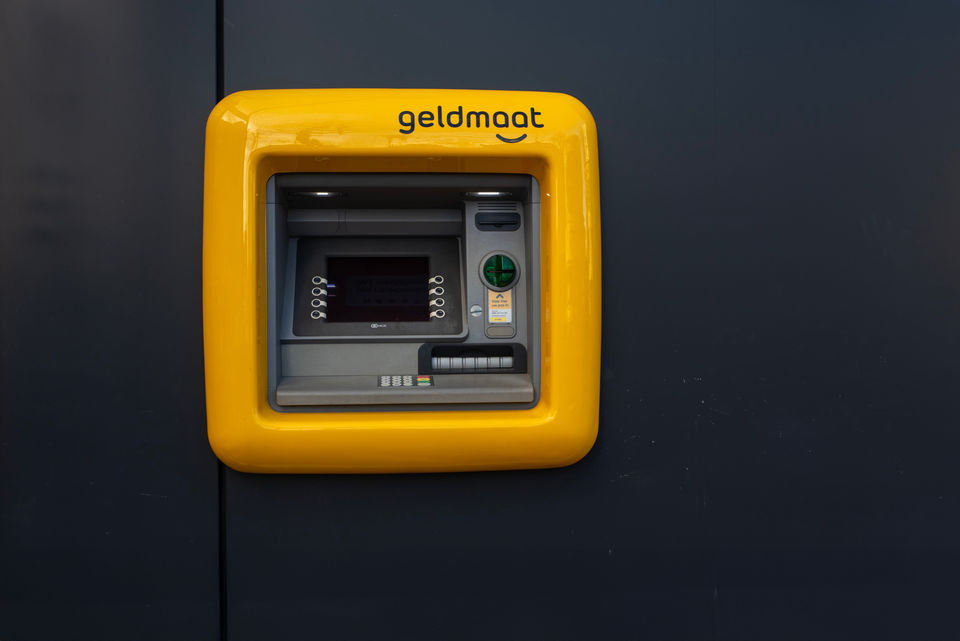
The ATM was the first technology to demonstrate, at a meaningful scale, that consumers would trust an unattended electronic terminal with a sensitive, high-stakes transaction. That shift in consumer behavior was the foundation on which everything else was built.
The First Interactive Computer Kiosk
In 1977, a pre-med student named Murray Lappe built the PLATO Hotline at the University of Illinois at Urbana-Champaign.
Using a touch-sensitive plasma display, students and visitors accessed campus maps, bus schedules, and course information. Thirty thousand people used it in its first six weeks. Although never commercialized, it showed purpose-built touch software could serve untrained users.
Japan's Shokken System and the Self-Order Model
While the West was building its first electronic terminals, Japan developed its own self-service culture. The shokken, or food ticket machine, became a standard fixture in Japanese ramen and soba restaurants.
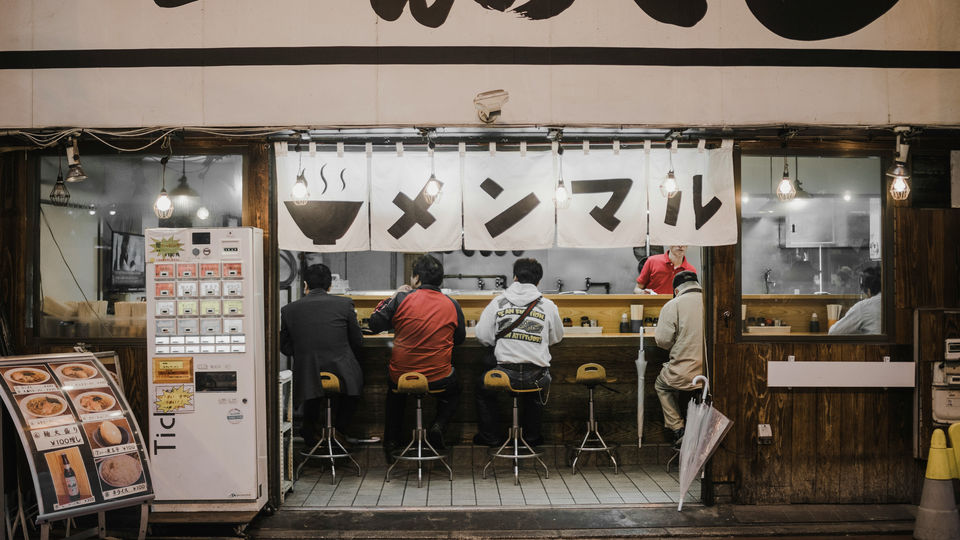
Customers purchased a meal ticket from a machine before entering. They then handed it to the kitchen staff and received their order without interacting with a server[7]. The system normalized a self-order behavior. Western markets would not adopt this at scale until touchscreen kiosks made it accessible enough to replicate.
The First Retail Kiosk Networks
In 1984, the Florsheim Shoe Company deployed interactive kiosks across more than 600 stores, allowing customers to order out-of-stock shoes for home delivery[6]. It was the first endless aisle kiosk in retail history, solving the out-of-stock problem before e-commerce existed to address it.
What made the network significant was not the hardware. Instead, it was the software infrastructure that managed inventory, orders, and fulfillment across hundreds of locations. That distinction between the terminal a customer sees and the system that makes it work would define the kiosk industry's most important debates for the next four decades.
The Internet Era and the Kiosk Boom (1990s–2000s)
By the end of the 1980s, self-service kiosks were found throughout banking, retail, and food service. Each terminal, however, continued to operate in isolation. Typically, it performed a single function in one location and relied on software that could not be updated remotely or linked to external systems. The internet changed that, and through the 1990s and into the 2000s, the industry expanded faster than at any prior point in its history.
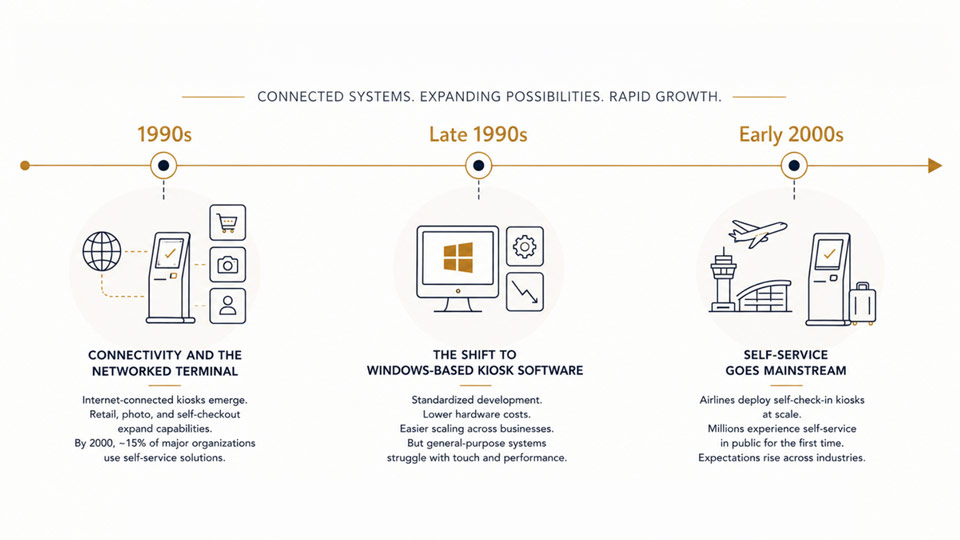
Connectivity and the Networked Terminal
The first internet-connected kiosk was demonstrated at Comdex in 1991, used to search for missing children across store and mall locations[8]. The following years brought a wave of commercial experimentation. In 1992, Price Chopper rolled out one of the first self-checkout kiosks inside a grocery store[9]. Then, in 1995, Kodak pushed its retail photo kiosk to the public[10].
With each new deployment, self-service kept drifting away from single-transaction terminals, and it got closer to systems that could manage multi-step interactions. By around 2000, about 15% of major organizations had put in some self-service solution, even if it was just partial in practice[11].
The Shift to Windows-Based Kiosk Software
For much of the 1980s and early 1990s, kiosk software ran on proprietary operating environments. These deployments were expensive and difficult to scale. The late 1990s changed the landscape: Windows-based systems standardized development, lowered hardware costs, and made large-scale deployment practical for a broader range of businesses.
This shift came with drawbacks. Windows, being a general-purpose computing environment, was never designed specifically for public-facing, touch-driven applications. Browser-based kiosk solutions also inherited these problems. As consumer expectations rose, limitations in performance and touch responsiveness became increasingly evident.
Self-Service Goes Mainstream
The clearest signal that self-service had entered the mainstream came from the aviation industry. In the early 2000s, American Airlines, Delta, and other major carriers rolled out self-check-in kiosks across airport terminals, which tens of millions of travelers used, many of whom encountered the technology for the first time[12].
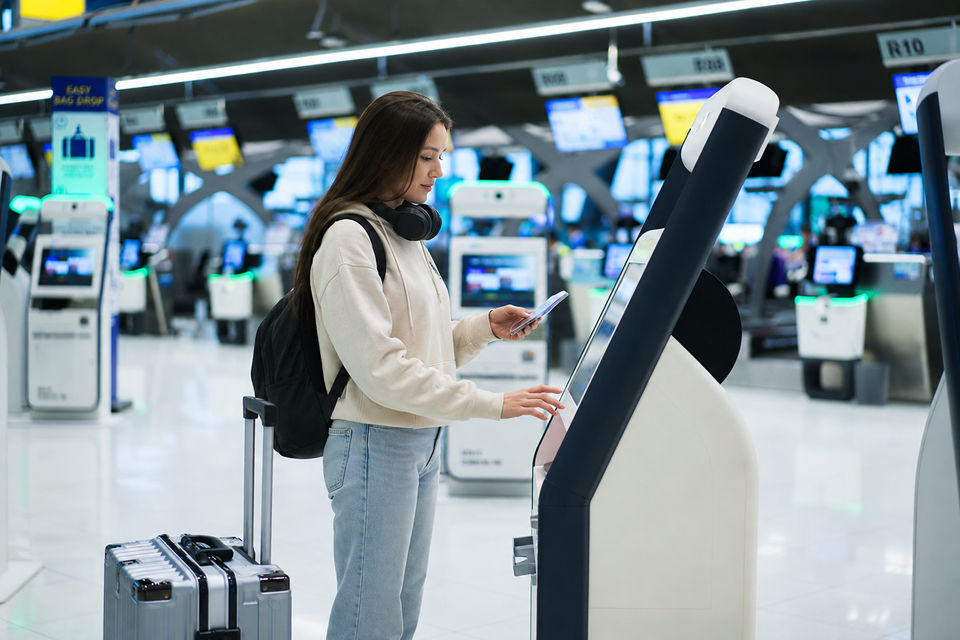
Beyond processing check-ins, airport kiosks normalized the behavior of completing a multi-step transaction independently at a terminal in a public space. Travelers carried those expectations into retail stores, restaurants, and hotels.
By the mid-2000s, the hardware had matured across multiple industries. The software, constrained by the web-based architectures inherited from the Windows era, had not kept pace.
The Touchscreen Revolution (2007–2018)
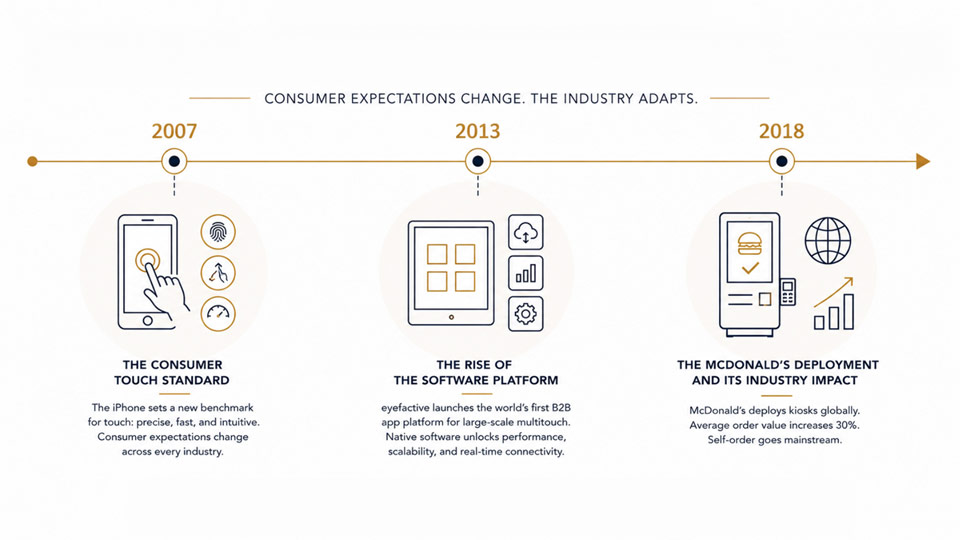
The software limitations of the Windows era did not gradually resolve. They were suddenly exposed in 2007, when Apple released the first iPhone and permanently reset consumer expectations for what touch interaction should feel like. The kiosk industry spent the following decade catching up.
The Consumer Touch Standard
Before the iPhone, touchscreens existed in kiosk environments but delivered experiences that were slow, imprecise, and visually dated. The iPhone introduced capacitive touch technology, fluid gesture controls, and a visual interface that responded instantly to input. Consumers who used it daily began arriving at retail kiosks, airport terminals, and self-order stations with a completely different frame of reference for what a touch interaction should feel like.
That shift in expectation created a gap between what existing kiosk software could deliver and what users now considered acceptable. Closing that gap required more than updated hardware. It required a fundamentally different approach to software architecture.
The Rise of the Software Platform
In 2013, eyefactive launched the world's first B2B app platform for professional large-scale multitouch systems. Rather than building custom software from scratch for each deployment, solution partners could configure and combine ready-to-use apps built on eyefactive's proprietary native software technology[13].
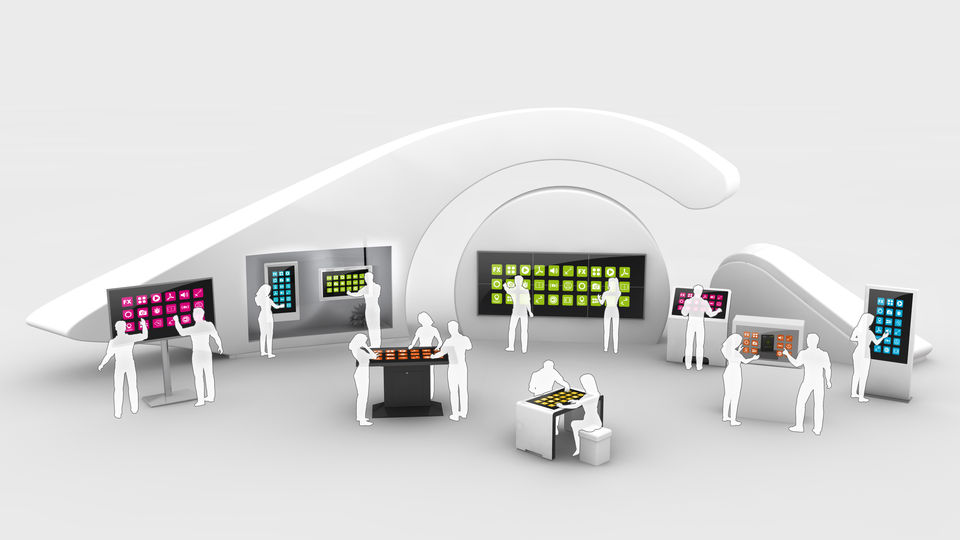
Unlike browser-based solutions, which have limited system resource access, native software runs at the operating system level. This architecture fully leverages CPU and GPU power, enabling unlimited multitouch and multi-user performance on large-scale displays, kiosk terminals, and interactive video walls.
The platform model addressed the core problem the Windows era had created: Generic software built for general computing. Cloud connectivity, remote device monitoring, and touch data analytics followed as standard platform capabilities, turning kiosks from isolated terminals into managed, updatable, data-generating systems.
The McDonald's Deployment and Its Industry Impact
The largest self-service kiosk deployment occurred in 2018, when McDonald's introduced self-order kiosks across all its markets worldwide. The results were significant: McDonald's reported a 30% increase in average order value, driven largely by customers customizing orders more extensively on screens than with staff[14].
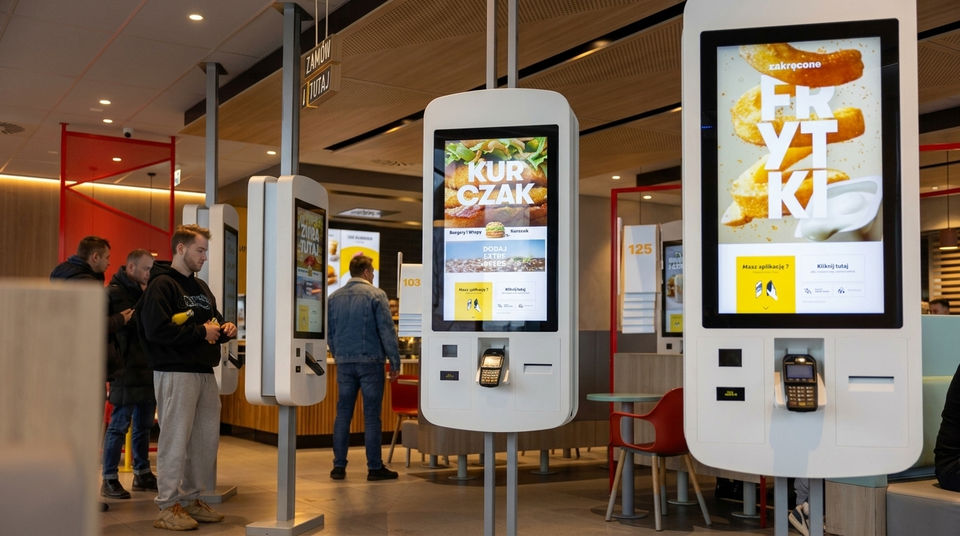
The McDonald's deployment did more than validate self-service as a revenue driver rather than purely a cost-reduction tool. It demonstrated to the broader retail and hospitality industry that touchscreen self-order, at a global scale, was operationally viable.
The groundwork laid by Japan's shokken system now had a major Western proof point, helping shift entire industries.
The State of the Industry Today (2019–2026)
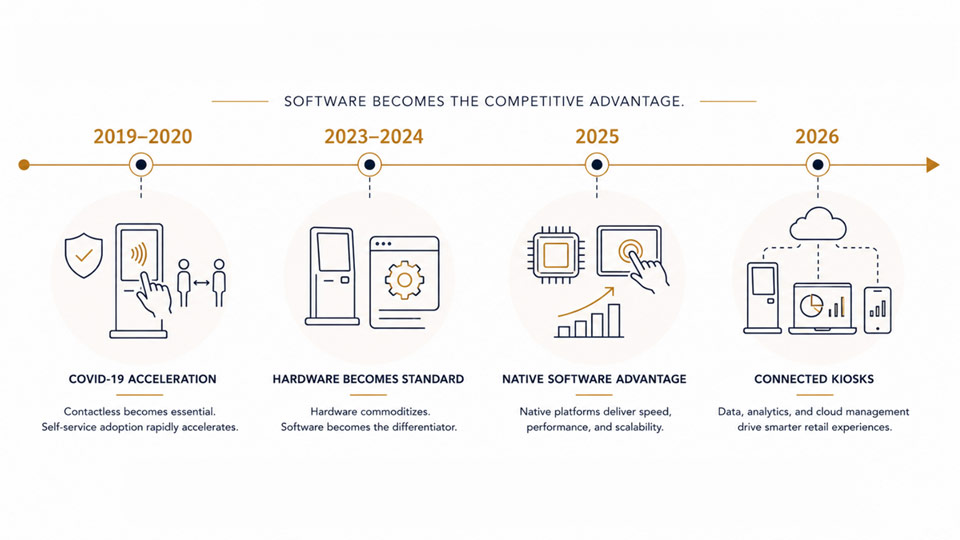
The platform era that began in the early 2010s set the structural conditions for what followed. Two external forces, a global pandemic and the commoditization of kiosk hardware, accelerated the industry into its current state faster than any planned technology roadmap could have.
The COVID-19 Acceleration
The COVID-19 pandemic compressed years of self-service adoption into months. Contactless interaction shifted from a convenience to a necessity across retail, hospitality, and healthcare, and businesses that had deferred kiosk investment moved quickly to deploy.
Consumer preference shifted with equal speed: 77% of shoppers now prefer self-service touchscreen solutions for speed and autonomy[15]. That preference has not reversed. The pandemic did not create demand for self-service, it made existing demand impossible to ignore.
Hardware Commoditization and the Software Imperative
The global self-service kiosk market reached an estimated USD 27.96 billion in 2026, growing at a CAGR of 9.3%[16]. EuroShop 2026 in Düsseldorf made the state of the hardware market visible: Hall 6 was lined with kiosk terminal manufacturers at every corner, a stark contrast to EuroShop 2023, where only a handful of companies presented interactive self-service solutions. Kiosk hardware has crossed from early-adopter technology into an industry standard.
When hardware becomes a commodity, the basis of competition shifts entirely. The enclosure, the screen, and the payment terminal are no longer differentiators. The software platform, the user experience it enables, and the data it generates are where the industry's competitive battles are now fought.
Native Software vs. Web-Based Software
Most kiosk software on the market today still runs on web-based architectures, operating within a browser instance with constrained access to system resources. For single-touch, single-user applications in controlled environments, that approach is functional. For large-scale multitouch displays, self-order kiosks handling simultaneous users, or interactive video walls requiring high-resolution rendering, the limitations become commercially significant.
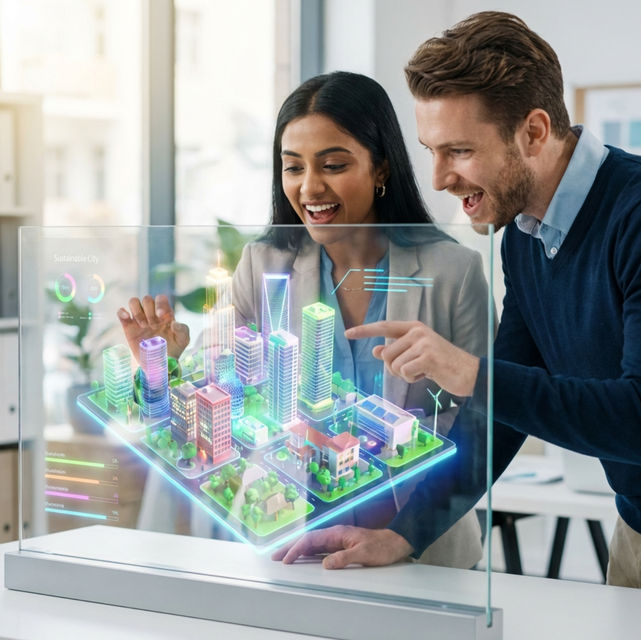
Native software, built to operate at the operating system level, removes those constraints. It makes full use of available CPU and GPU resources, supports unlimited touch points and concurrent users, and integrates with hardware peripherals and sensor technologies at a depth that browser-based solutions cannot match.
| Web-Based Kiosk Software | Native Kiosk Software | |
|---|---|---|
| System access | Runs inside a browser instance with constrained access to system resources | Runs at the operating system level with full access to CPU and GPU power |
| Touch performance | Functional for single-touch, single-user applications in controlled environments | Unlimited touch points and simultaneous multi-user interaction |
| Display scale | Limited on large-scale displays and high-resolution rendering | Built for large-format displays, kiosk terminals and interactive video walls |
| Hardware integration | Shallow integration with peripherals and sensors | Deep integration with peripherals, sensors and object recognition technology |
For retailers and solution partners evaluating kiosk platforms, the distinction between native and web-based software is not a technical detail. It is the difference between a kiosk that performs under pressure and one that does not.
Data, Analytics, and the Connected Kiosk
The kiosk is no longer evaluated purely as a transaction device. Cloud-based platforms now collect touch interaction data across every connected system, generating behavioral insights. Retailers can track which products customers engage with, how long they spend on each screen, and where interactions drop off, feeding that data into business intelligence tools such as Microsoft Power BI or Adobe Analytics[17].
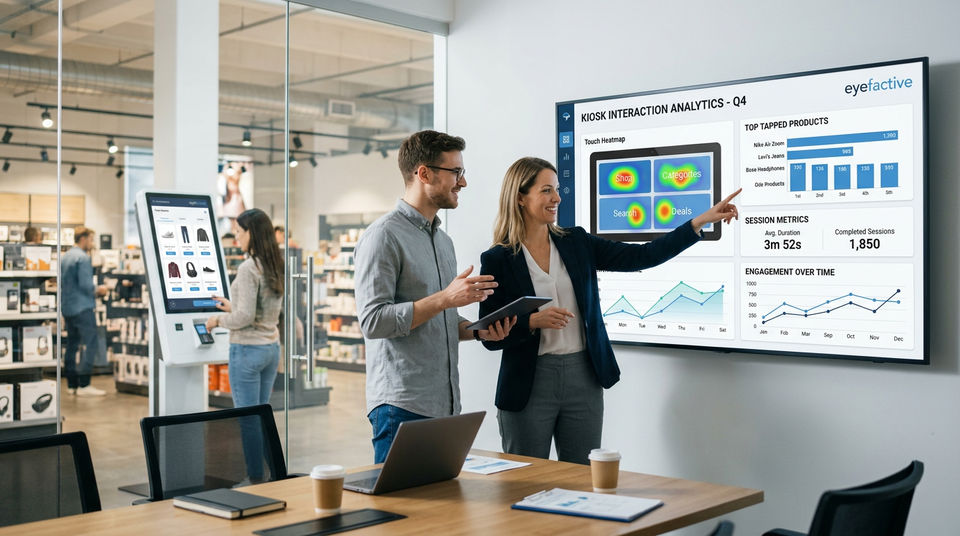
This capability reframes the value proposition of a self-service kiosk. A well-instrumented kiosk terminal is not just a point of transaction. It is a data-collection point that provides retailers with in-store behavioral intelligence previously unavailable to them.
Asia-Pacific leads global deployment growth at an estimated 18.10% CAGR through 2030, with Japan's mature self-service infrastructure remaining a benchmark for density, integration, and operational sophistication[18].
The Road Ahead (2026 and Beyond)
The structural conditions for the next phase of self-service kiosk development are already in place. Hardware is standardized. Software platforms are maturing. Consumer behavior has normalized self-service across every major retail and hospitality environment. What comes next is not a reinvention of the kiosk but an expansion of what it can do and what it knows.
AI and Personalization at the Point of Sale
Artificial intelligence is the most discussed technology in retail today, and at the point of sale, its most immediate application is personalization. AI-driven kiosks can adapt menus, promotions, and product recommendations in real time based on contextual signals, time of day, inventory levels, and interaction history.
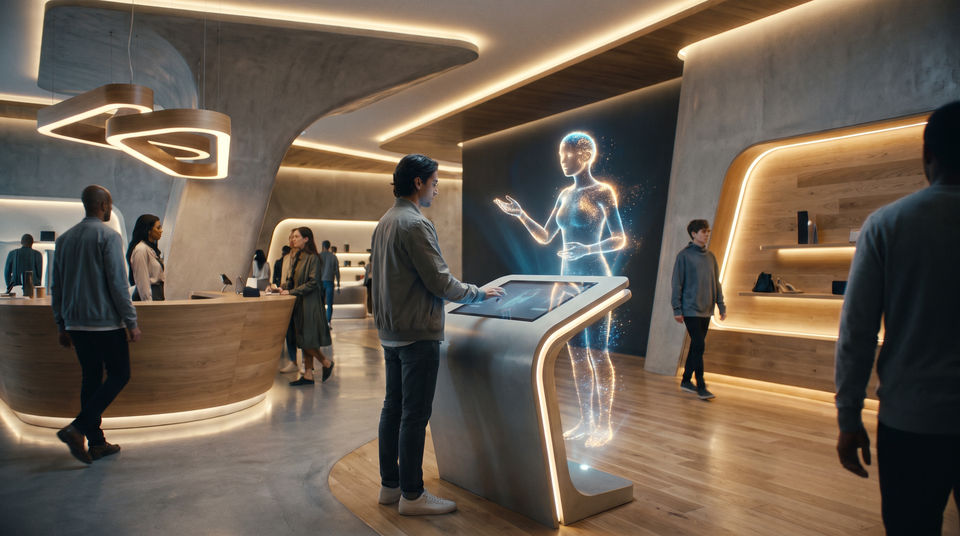
At EuroShop 2026, AI-powered self-service demos were present, but fully deployed implementations remained rare[19]. The technology is on a clear trajectory, however.
eyefactive has identified AI-generated content creation for touchscreen applications and AI-driven personalization within its app platform as near-term development priorities. Deeper integration of conversational AI into its multitouch software layer is the medium-term direction[16].
Sensor Integration and the Responsive Store
The next generation of self-service kiosks will be interconnected. Motion sensors, RFID, computer vision, and lift-and-learn technologies are making stores responsive, adapting displays to the customer present.
The IoT in retail is growing at an estimated 25.9% annually. Retailers using shelf-level motion sensors and heatmap tracking have reported up to a 28% lift in basket value by shifting promotional displays based on dwell-time data[16]. For kiosk platforms with existing sensor integration capabilities, this convergence represents a natural extension rather than a new capability to build from scratch.
Unified Commerce and the Headless Platform
Standalone kiosk deployments are giving way to fully integrated commerce ecosystems. Retailers increasingly require kiosk software to connect with existing PIM, ERP, loyalty, and e-commerce platforms rather than operate as a separate system.
The headless API approach, where the kiosk serves as an interactive front end drawing from a shared back-end infrastructure, makes that integration possible without replacing existing tool stacks.
Research from Shopify indicates that businesses using a unified commerce approach see 22% better total cost of ownership and 20% faster implementation times[20]. As omnichannel expectations become the baseline rather than a differentiator, kiosk platforms that cannot integrate will find themselves excluded from enterprise retail decisions.
The Platform as the Competitive Moat
The global self-service kiosk market is projected to exceed USD 39 billion by 2035[21]. As that market grows, the retailers and solution partners who have invested in software infrastructure, cloud connectivity, analytics capability, and open integration architecture will have a structural advantage over those still evaluating kiosks as hardware purchases.
The platform is not just where the experience lives. It is where the data lives, where the updates are deployed, and where the competitive distance between operators will widen most visibly in the years ahead.
FAQ: The History and Future of Kiosk Software
The earliest recorded self-service device was built by Hero of Alexandria around 215 BCE, a coin-operated mechanism that dispensed holy water in Egyptian temples. In the modern commercial sense, the first self-service kiosks were coin-operated vending machines that appeared in Britain and the United States in the 1880s.
The first interactive computer kiosk was built in 1977 by Murray Lappe at the University of Illinois at Urbana-Champaign. Called the PLATO Hotline, it ran on a touch-sensitive plasma display and attracted 30,000 users in its first six weeks.
Florsheim Shoe Company launched the first commercial retail kiosk network in 1984, in more than 600 stores. With the widespread adoption of capacitive touch technology in the 2010s, touchscreen self-service kiosks became standard in retail environments worldwide.
Japan's self-service culture dates back to 1888, when Takashichi Tawaraya filed the country's first vending machine patent. Cultural values around efficiency and minimal friction in public transactions accelerated adoption, with the shokken food ticket machine normalizing self-order behavior in restaurants decades before Western markets followed.
Self-order kiosks became mainstream in fast food in 2018, when McDonald's achieved a global rollout of self-service kiosk terminals. This deployment drove a 30% rise in average order value.
Web-based kiosk software runs within a browser instance with limited access to system resources, restricting performance on large-scale multitouch displays and multi-user terminals. Native kiosk software operates at the operating system level, delivering full CPU and GPU performance and unlimited simultaneous touchpoints. eyefactive's native software platform is purpose-built for large-scale interactive kiosk systems and represents the performance standard that web-based solutions cannot match.
The global self-service kiosk market will reach an estimated USD 27.96 billion in 2026 with a CAGR of 9.3%. The market will exceed USD 39 billion by 2035.
AI will transform self-service kiosks from static interfaces to adaptive, real-time personalized systems. In the near future, conversational AI combined with native kiosk software and sensor technology will empower kiosks to deliver intelligent responses to every user at the point of sale.
Weitere Informationen
- [1] Self-service kiosks: Business benefits, uses, kioskmarketplace.com
- [2] The Evolution of Self-Service Kiosks, meridiankiosks.com
- [3] The World of Japanese Vending Machines, japannakama.co.uk
- [4] The doctrine of kiosks: How kiosks evolved over time, medium.com
- [5] Behind the Screen: Modern Kiosk Management, Kiosk History, and Why You Need MDM, medium.com
- [6] A Brief History of the Kiosk, technikmfg.com
- [7] The Rise of Self-Service Dining in Japan, viscovery.com
- [8] The journey of kiosks: Transforming customer experience, trueconf.com
- [9] A Brief History of Self Service Kiosks, advancedkiosks.com
- [10] Photo kiosk makers race to retail, kioskmarketplace.com
- [11] Effect Of Self-Service Technology On Customer Satisfaction In Service Industry, usiu.ac.ke
- [12] Delta's Flight to Self-Service, bloomberg.com
- [13] eyefactive - Company History, eyefactive.com
- [14] Self-Service Kiosks Boost Consumer Spending By 30 Percent, pymnts.com
- [15] 2025 Commerce Experience Report, ncrvoyix.com
- [16] 6x Retail Tech Trends: How Retail Media, AI and Self-Service are Reshaping the POS, eyefactive.com
- [17] In-Store Retail Analytics, eyefactive.com
- [18] Self-Service Kiosk Market Size, Share, mordorintelligence.com
- [19] Euroshop 2026: AI Expectations Are Sky-High, invidis.com
- [20] Unified Commerce and Ecommerce, shopify.com
- [21] The Rise of Intelligent Self-Service Kiosks, grubbrr.com